VEX Robotics Qualification 2025: Striving for Consistency
Striving for consistency with robot mechanical design
Project at a glance
- Directed mechanical design for four VEX U competition robots.
- Used adjustable, test-driven mechanisms to improve scoring consistency.
- Reached third globally, earned eight awards, and set an unofficial autonomous-skills record.
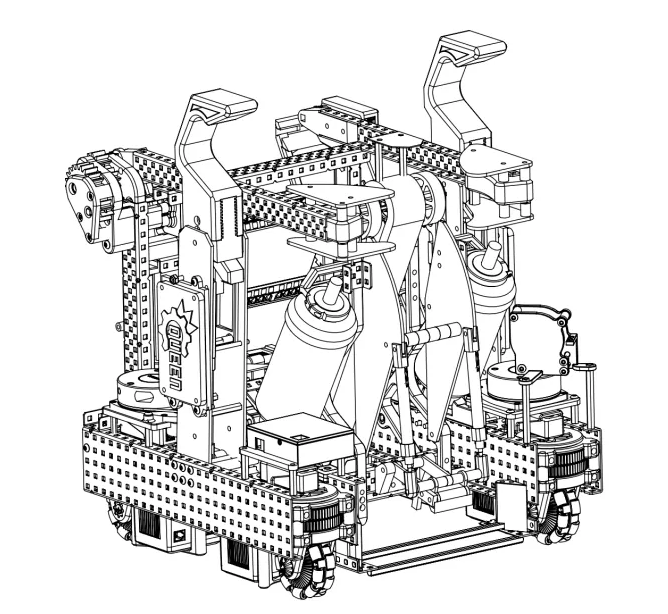 Our final design in CAD
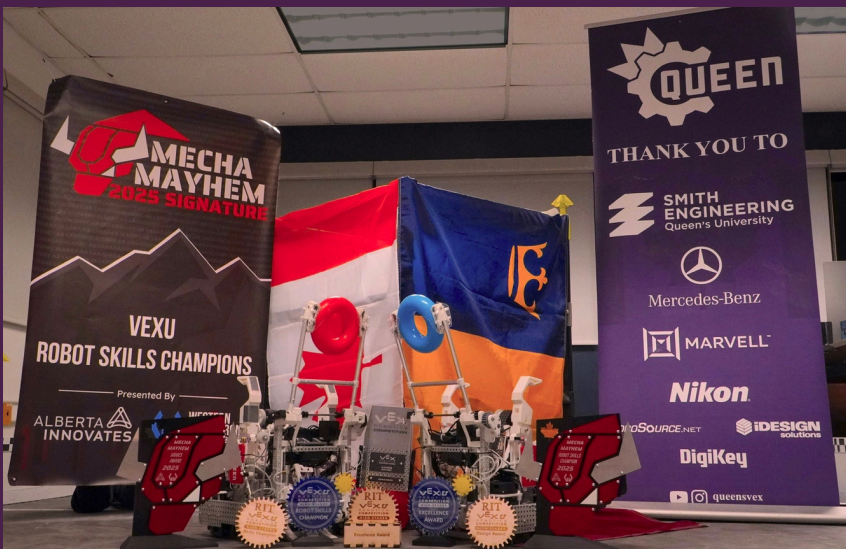
I directed the mechanical design of four robots during the 2024–2025 school year for the Queen’s VEX Robotics Team. We build two robots per semester and compete in two-vs-two matches against universities from around the world. That year’s game, High Stakes, focused on scoring plastic rings on stakes. Our first two robots achieved a peak global ranking of third among 256 teams, won eight awards at four tournaments, placed in the top three at Canadian national qualifiers, and demonstrated several mechanically difficult systems.
We also achieved the unofficial world record for autonomous-skills points shown below. Autonomous skills is a one-minute, two-robot time trial with no opposing alliance.
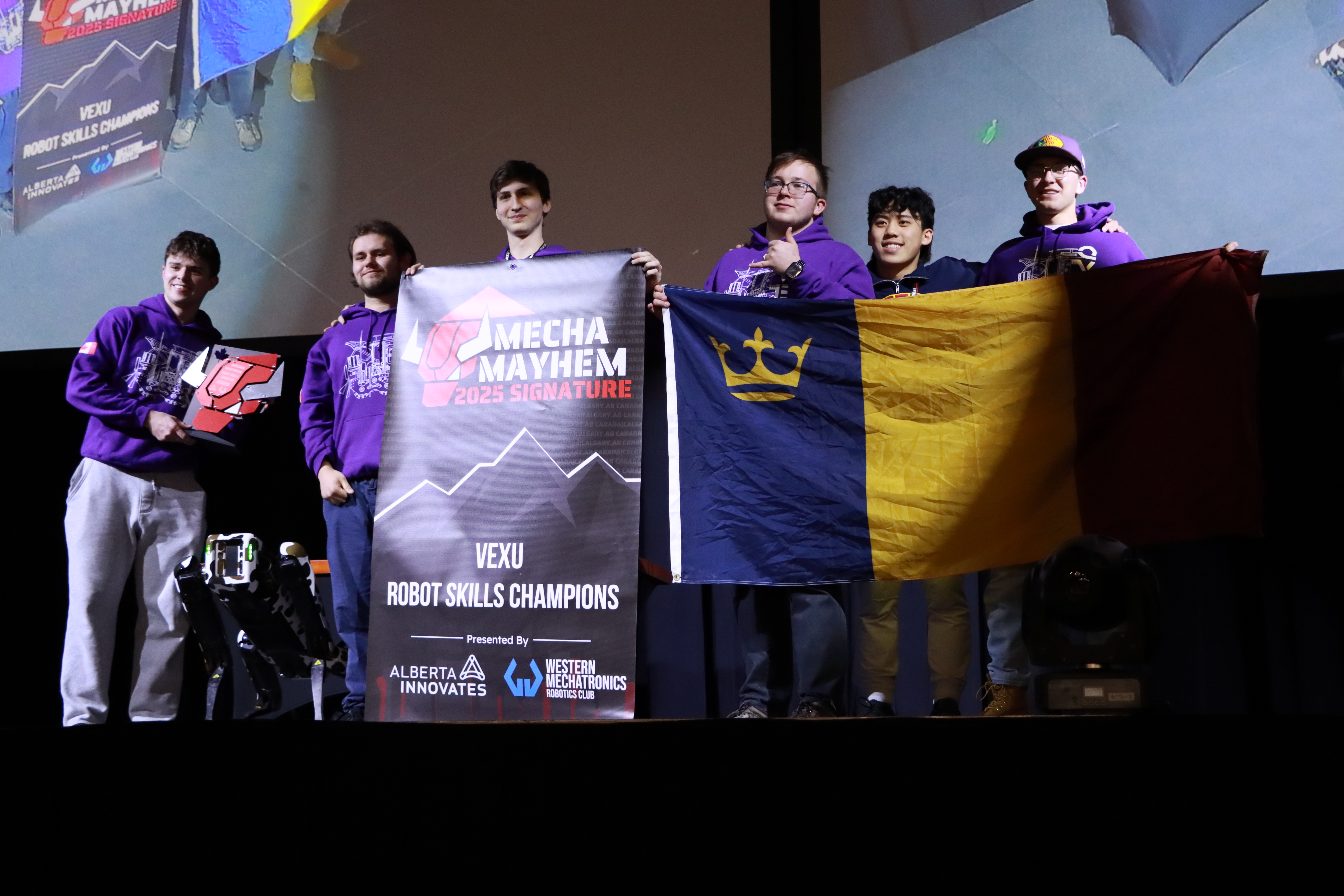
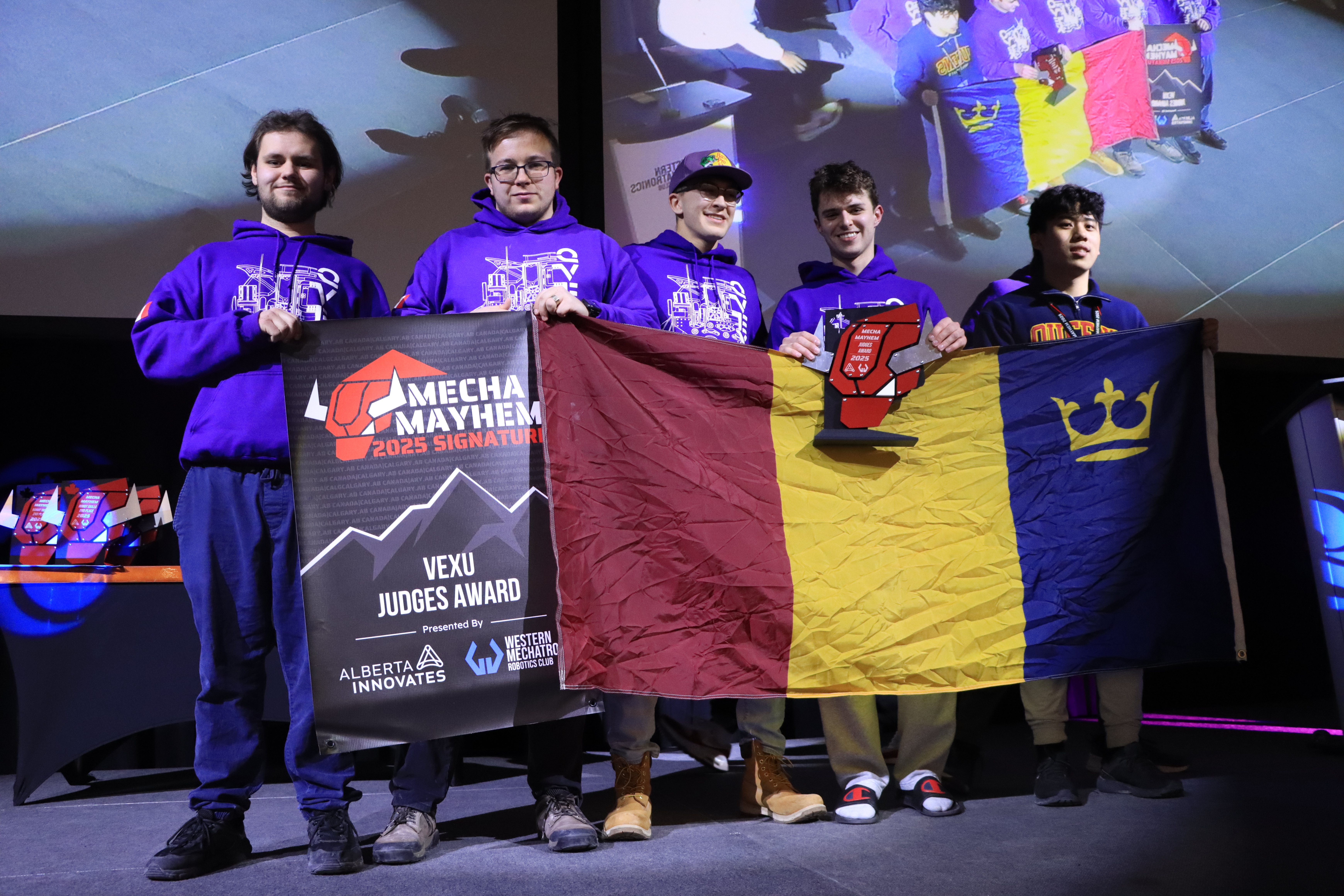
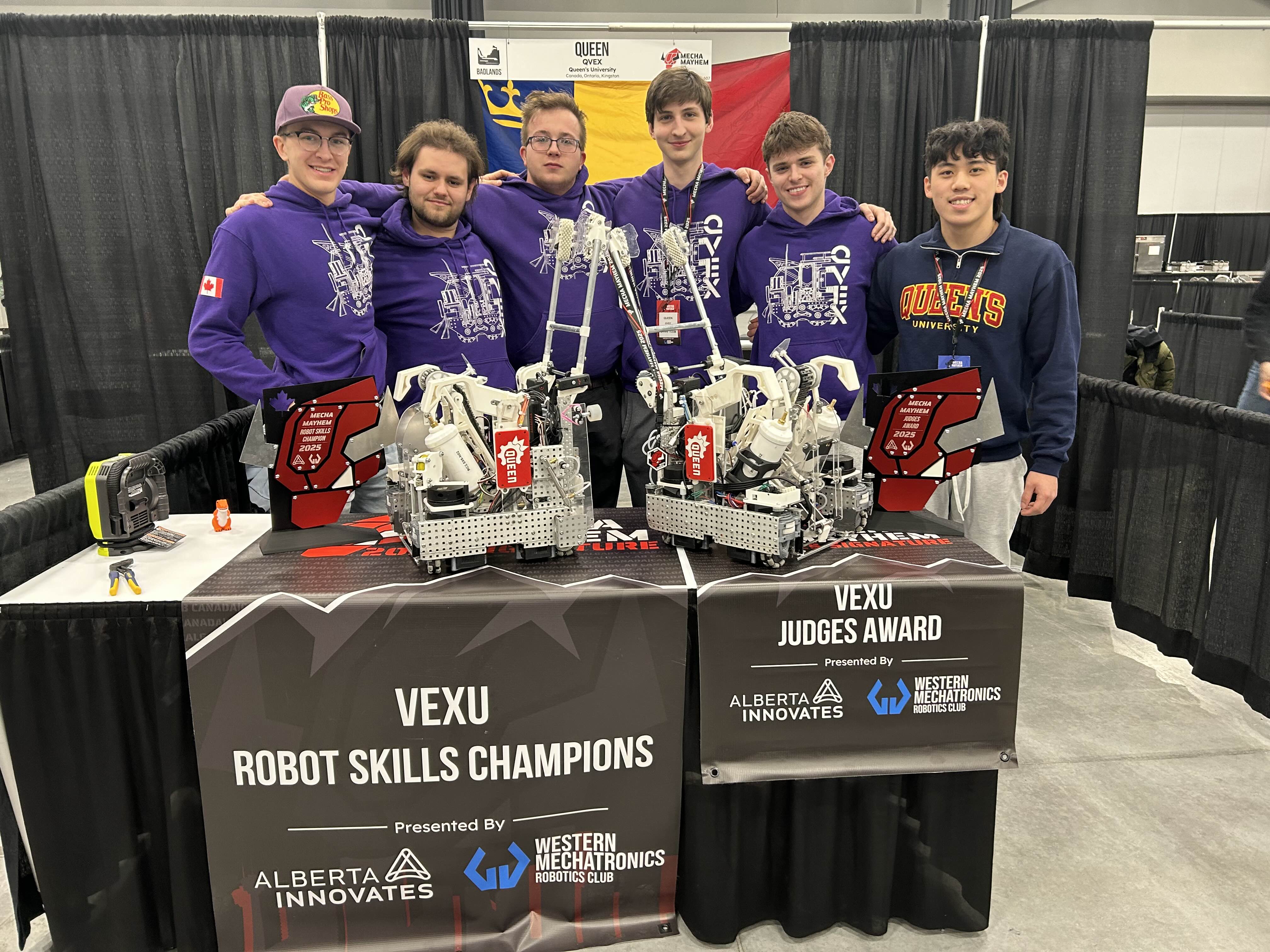
At the 2025 Canadian national qualifier, Mecha Mayhem, we outscored nine teams to win Skills Champion and also received the Judges Award.
Consistency and Iteration
Adjustability is one of the most important features of a good prototype. The difference between reliable and unreliable performance can be only a few millimetres. For example, one linear intake struggled to feed rings into the robot until we raised its rollers by 5 mm using shims beneath the guide rods. The reduced compression allowed each ring to enter the conveyor smoothly. Leaving room for adjustments such as shims made mechanical tuning much faster.
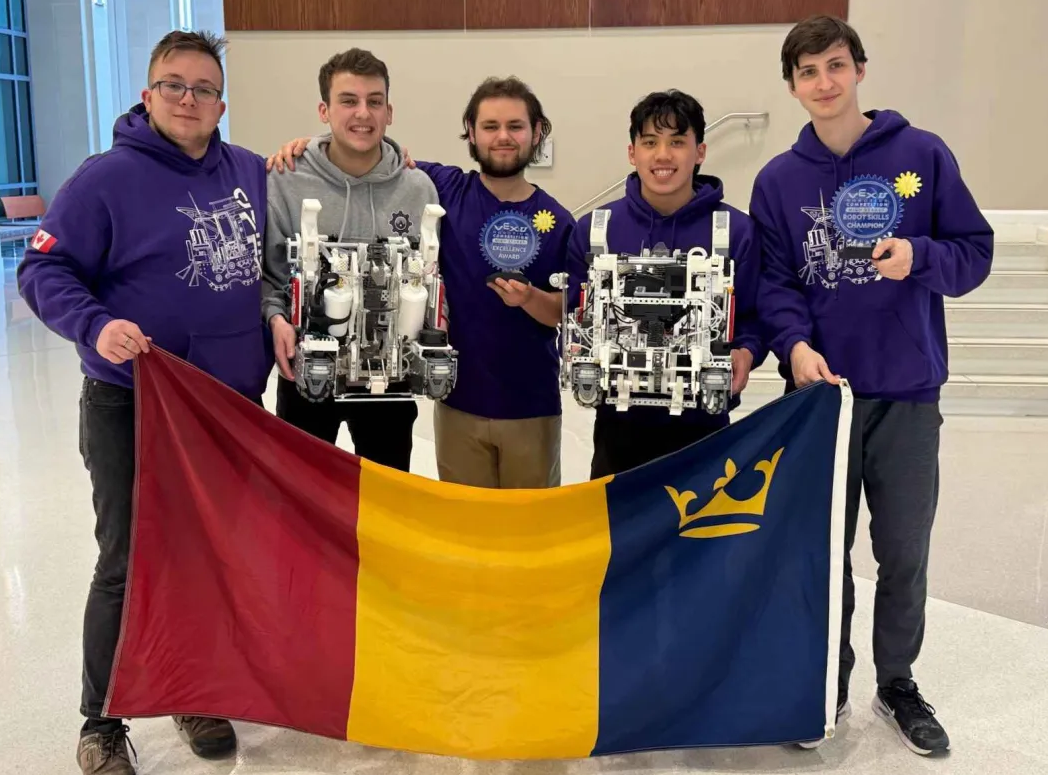
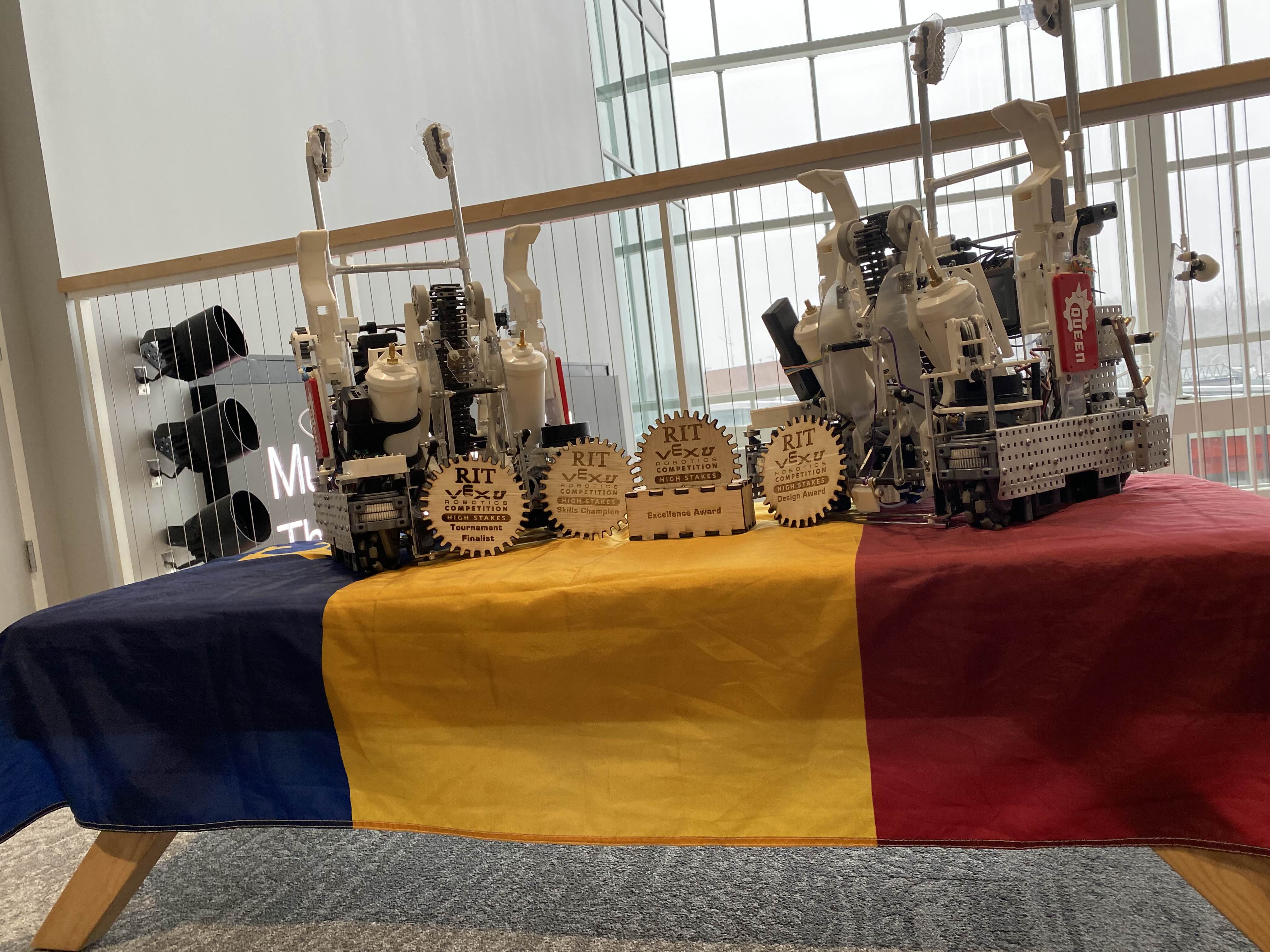
Awards from RIT, Mecha, Mid-Atlantic and QRC:
Other Takeaways
-
Coordinating several people in one CAD assembly is difficult. Volume allocations and regular communication prevent independently designed mechanisms from becoming incompatible.
-
It is easy to overdevelop a mechanism that is unnecessary or can be replaced by a simpler design. Recognizing that situation early creates more time to evaluate better concepts.
-
In VEX, light, fast, and simple mechanisms usually score more points while introducing fewer failure modes.
In CAD (we use Onshape)
Mid-Atlantic Awards
 RIT Awards
Wall-stake Testing
This covers the first half of the season; see my World Championship project for the second half.






Related albums
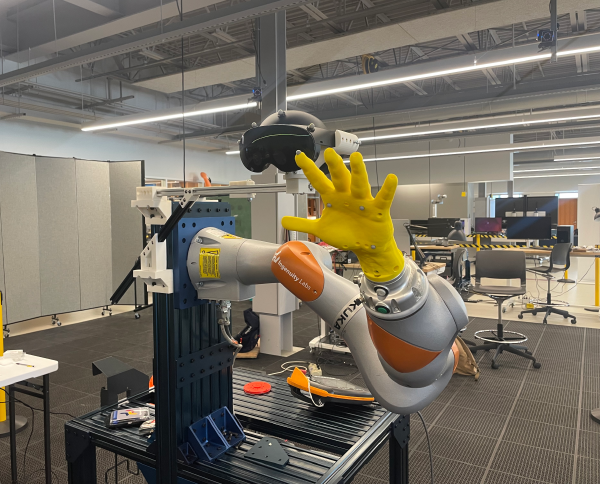
VR Hand Tracking Characterization
- Built repeatable VR hand-tracking experiments around a 7-DOF KUKA cobot.
- Combined motion capture with a 3D-printed hand to establish sub-millimeter ground truth.
- Compared Meta Quest headsets in research published at IEEE VR 2025.
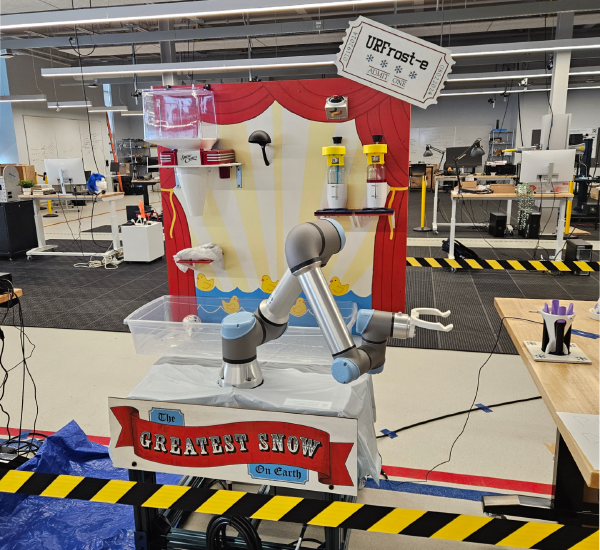
Robot-Served Snow Cone Cell
- Helped build a robot cell that prepared and served snow cones automatically.
- Designed the cell layout and a physical ordering interface for red or blue cones.
- Connected user input to a ROS 2 sequence that served roughly 50 conference guests.
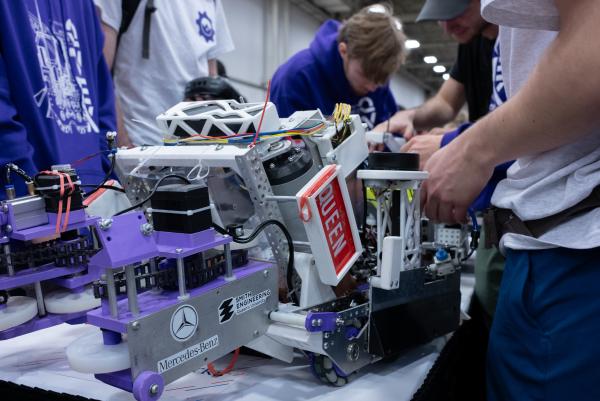
VEX U Intake and Launching Mechanisms
- Developed intake and launching mechanisms for two VEX U competition robots.
- Improved the six-wheel intake to greater than 95% success through friction and tension tuning.
- Collaborated with a design team of more than 10 students and qualified for the World Championship.